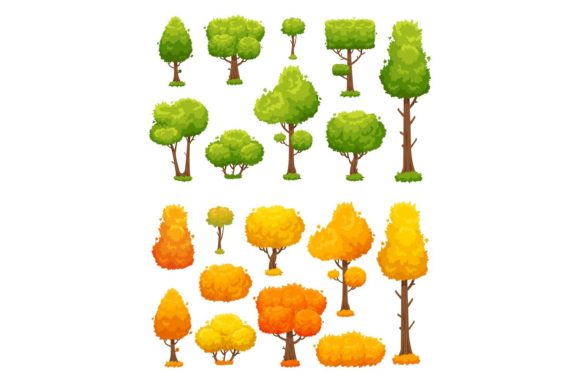
Cartoon Trees: A Guide to Versatile Vector Assets for Eco-Friendly Design
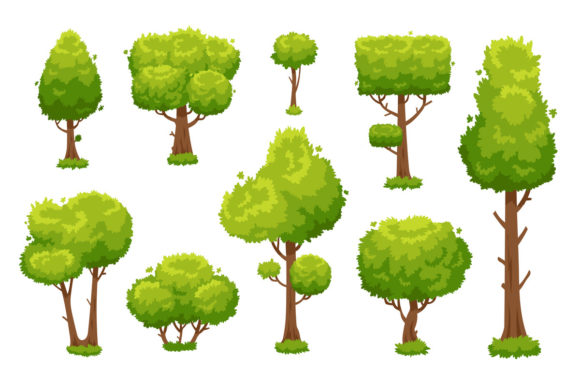
In the realm of digital illustration and graphic design, the demand for adaptable, high-quality assets is constant. Among these resources, Cartoon Trees have emerged as a popular choice for designers working on projects ranging from children’s educational materials to environmental awareness campaigns. This collection typically features cute wood plants, bushes, and foliage rendered in vibrant green and yellow hues, evoking the transitional beauty of autumn and summer. Understanding the technical specifications, aesthetic qualities, and practical applications of these vector elements is essential for creators looking to enhance their visual storytelling while maintaining efficiency in their workflow.
Understanding the Asset Composition
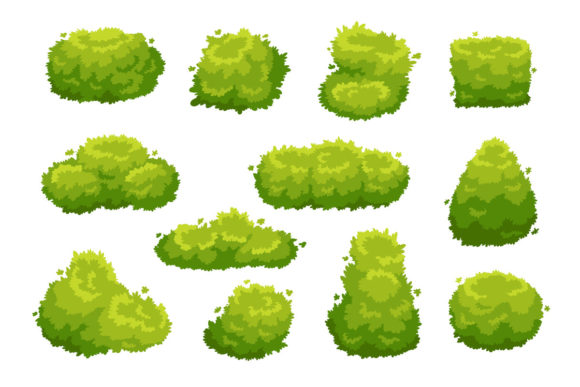
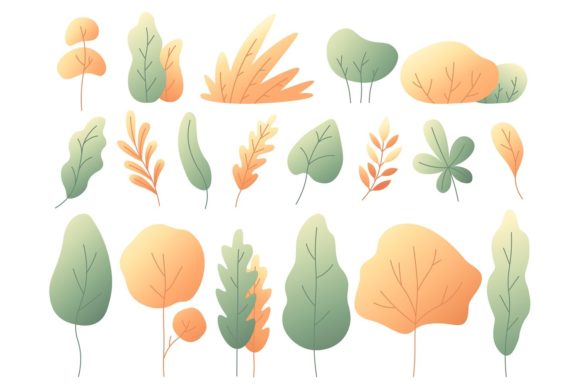
At its core, this product file offers a curated set of landscape icons and elements designed to represent nature in a stylized, approachable manner. The collection includes various tree shapes, shrubs, and plant life that can be used individually or combined to create complex scenes. The visual style is characterized by clean lines and flat or semi-flat coloring, which aligns well with modern design trends that favor clarity and simplicity. The color palette primarily utilizes greens and yellows, making it suitable for depicting lush summer forests or the golden tones of early autumn.
From a technical perspective, the asset is delivered in two primary formats: one vector EPS10 file and one JPEG preview at 72ppi. The inclusion of the EPS10 format is significant because it ensures compatibility with a wide range of vector editing software, most notably Adobe Illustrator. This format allows designers to scale the images to any size without losing resolution, a critical feature for projects that may require both small web icons and large-format prints such as banners or signage for eco-parks.
Key Benefits for Designers and Developers
The primary advantage of using Cartoon Trees lies in their versatility and editability. Because the files are vector-based, users are not locked into a static image. If a project requires a specific arrangement of trees, designers can easily separate elements, remove unwanted branches, or adjust colors to match a brand’s identity. This level of customization saves time compared to creating illustrations from scratch, allowing professionals to focus on layout and composition rather than foundational drawing.
Furthermore, the aesthetic appeal of these assets supports specific thematic goals. The "cute" and friendly appearance of the wood plants makes them ideal for audiences that respond well to approachable, non-threatening imagery. This is particularly relevant for educational content, where engaging young learners is a priority, or for environmental initiatives that aim to present nature as accessible and worth protecting. The isolated icon elements also facilitate easy integration into user interfaces, infographics, and mobile applications, where clear, recognizable symbols are necessary for effective communication.
Practical Applications and Use Cases
Identifying the right context for these assets is crucial for maximizing their impact. One strong fit for Cartoon Trees is in the development of materials for garden centers, forest conservation groups, and eco-parks. The green and yellow color scheme naturally aligns with themes of growth, sustainability, and seasonal change. For instance, a signage system for a local botanical garden could utilize these vector elements to create wayfinding maps that are both informative and visually appealing.
Another significant application is in digital media and web design. The lightweight nature of vector graphics, when properly optimized, contributes to faster loading times for websites and apps. Designers can use the isolated elements to build parallax scrolling backgrounds, interactive game environments, or animated explainer videos about climate change and planetary health. The ability to manipulate individual components means that animations can be created more efficiently, with leaves rustling or trees swaying through simple transformations in animation software.
Educational publishers also find value in such collections. Textbooks, worksheets, and e-learning modules often require consistent visual language. Using a unified set of tree and plant icons ensures that all materials look cohesive, reinforcing the professional quality of the educational product. Whether illustrating a biology lesson on photosynthesis or a geography chapter on forest biomes, these assets provide a reliable visual foundation.
Considerations and Tradeoffs
While Cartoon Trees offer numerous advantages, it is important to consider potential limitations. The stylized, cartoonish nature of the illustrations may not be suitable for projects requiring photorealism or scientific accuracy. For example, a botanical journal or a serious environmental impact report might require more detailed, realistic depictions of specific plant species. In such cases, relying on generic cartoon icons could undermine the credibility of the content.
Additionally, the popularity of such vector sets means that they may be widely used across the internet. Designers seeking unique, bespoke branding should be aware that using stock vector elements can sometimes result in a lack of distinctiveness. To mitigate this, it is advisable to heavily customize the assets—altering colors, combining elements in novel ways, or integrating them with original hand-drawn components. This approach helps maintain a unique visual identity while still benefiting from the time-saving aspects of pre-made assets.
Technical proficiency is another consideration. While the JPEG preview allows for quick viewing, effective use of the EPS10 file requires familiarity with vector editing software like Adobe Illustrator, CorelDRAW, or Inkscape. Users who are only comfortable with raster-based programs like Photoshop may find the learning curve steep, although basic scaling and placement can still be achieved. It is essential to ensure that the design team has the necessary skills to unlock the full potential of the vector format.
Evaluating Alternatives
When deciding whether Cartoon Trees are the right choice, it is helpful to compare them with alternatives. Custom illustration offers the highest degree of uniqueness and tailored messaging but comes with significantly higher costs and longer turnaround times. Photographic stock images provide realism and texture but lack the flexibility of vectors and can appear cluttered in minimalist designs. Other stock vector libraries may offer different styles, such as watercolor, line art, or isometric perspectives, which might better suit specific brand guidelines.
If the goal is to create a highly specialized or scientifically accurate representation of flora, hiring a botanical illustrator or purchasing specialized scientific datasets may be more appropriate. However, for general-purpose design, marketing materials, and user-friendly digital interfaces, the balance of cost, flexibility, and aesthetic appeal offered by cartoon-style vectors is often superior.
Making an Informed Decision
Ultimately, the decision to incorporate Cartoon Trees into a project should be guided by the specific goals of the design and the needs of the target audience. If the objective is to create engaging, accessible, and scalable visuals for environmental, educational, or recreational contexts, these assets provide a robust solution. The ability to edit and customize the vector elements ensures that they can be adapted to fit diverse creative visions.
Designers should evaluate their technical capabilities, ensuring they have the software and skills to manipulate EPS files effectively. They should also consider the broader visual strategy of their project, determining whether a stylized approach aligns with their brand voice. By weighing the benefits of efficiency and versatility against the need for uniqueness and realism, creators can determine if this collection aligns with their professional requirements. When used thoughtfully, these vector elements can enhance communication, support environmental messaging, and add a touch of natural charm to digital and print media alike.