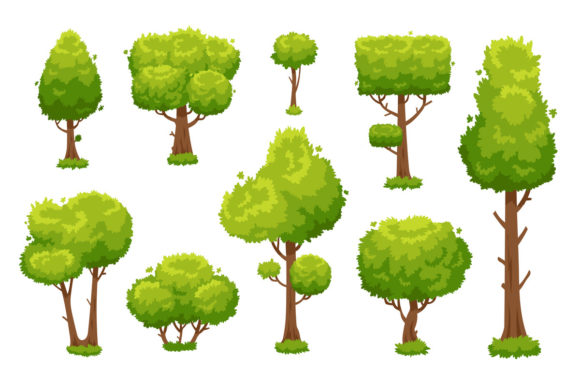
Cartoon Green Tree: A Versatile Asset for Designers and Creators
In the vast ecosystem of digital design resources, few elements are as universally applicable yet frequently overlooked as the humble tree illustration. Specifically, a Cartoon Green Tree serves as more than just decorative foliage; it is a foundational building block for visual storytelling, branding, and environmental communication. Whether you are crafting a whimsical children’s book, designing an eco-friendly product label, or developing a user interface for a gardening app, the right vector asset can save hours of work while elevating the aesthetic quality of your project.
The appeal of these illustrations lies in their adaptability. A well-crafted cartoon tree is not bound by the rigid constraints of photorealism. Instead, it offers a stylized interpretation of nature that feels approachable, friendly, and clean. This makes it an ideal choice for projects targeting a broad demographic, from young children to adults seeking a touch of organic warmth in digital spaces. When you integrate a high-quality vector illustration into your workflow, you are not just adding an image; you are injecting personality and context into your design.
Bridging the Gap Between Nature and Digital Design
One of the primary challenges modern designers face is representing nature in a way that feels authentic without being cluttered. Photographic backgrounds often compete with foreground text or products, creating visual noise. This is where the Cartoon Green Tree shines. By simplifying the complex textures of bark and leaves into smooth shapes and vibrant greens, these illustrations provide a clear, unobtrusive backdrop that supports rather than overwhelms the main content.
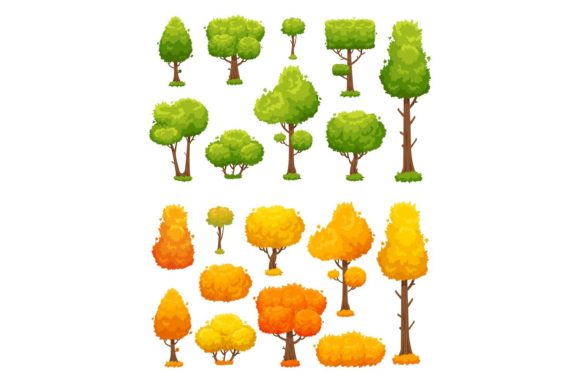
Consider the landscape of educational materials. Teachers and content creators constantly seek resources that engage students without causing cognitive overload. A cute landscape featuring isolated wood plants and bushes allows educators to build custom scenes for biology lessons, geography maps, or story prompts. Because the elements are isolated, they can be rearranged to teach concepts like forest layers, seasonal changes, or habitat diversity. The flexibility of having separate elements means you are not stuck with a static image; you become the director of your own visual narrative.
Practical Applications Across Industries
The utility of a vector tree set extends far beyond simple decoration. Different industries leverage these assets in unique ways to communicate specific messages effectively.
- Eco-Friendly Branding: Companies promoting sustainability often struggle to avoid clichéd imagery. A stylized, modern cartoon tree offers a fresh take on environmentalism. It can be used on packaging for organic foods, reusable bags, or biodegradable products to signal "natural" without appearing dated or generic.
- Urban Planning and Architecture: Architects and landscape designers use simplified vector trees in presentation boards to indicate green spaces. While technical drawings require precision, conceptual renders benefit from the approachable feel of cartoon-style vegetation to help clients visualize the end result of a park or garden renovation.
- Digital Marketing and Social Media: In the fast-paced world of social media, clarity is king. A bright, cheerful tree icon or background element can stop the scroll. Marketers use these graphics to highlight Earth Day promotions, outdoor event announcements, or wellness campaigns. The vibrant colors associated with cartoon greens tend to perform well algorithmically, evoking positive emotional responses.
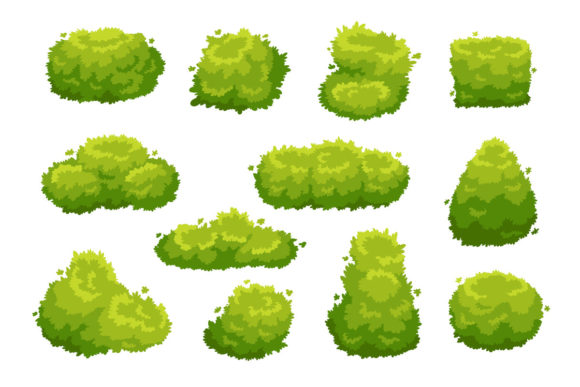
- Game Development and UI Design: For indie game developers, especially those working on 2D platformers or mobile puzzle games, pre-made vector assets are invaluable. A set of cartoon trees, bushes, and hedges provides a cohesive art style for level design. Similarly, UI designers might use small tree icons to represent categories like "outdoors," "gardening," or "nature" within an app interface.
The Technical Advantage of Vector Formats
When selecting digital assets, the file format is just as critical as the visual style. The inclusion of an EPS10 file alongside a JPEG preview is a significant advantage for professional workflows. Vector graphics are resolution-independent, meaning they can be scaled from the size of a favicon to a billboard without losing clarity or becoming pixelated. This scalability is non-negotiable for designers who need to repurpose assets across various mediums.
For instance, imagine you are designing a logo for a local nursery. You start with a small web banner, but the client later requests a large vinyl sign for their storefront. If you had only used a raster image (like a standard JPEG), the edges would blur and pixelate when enlarged. With a vector EPS file, you can scale the Cartoon Green Tree infinitely, ensuring crisp lines and solid colors at any size. Furthermore, vectors allow for easy color manipulation. If your brand guidelines require a specific shade of teal instead of the default forest green, you can adjust the fill colors in seconds using software like Adobe Illustrator.
Customization and Editing Flexibility
The true power of this resource lies in its editability. The prompt notes that if you want to separate elements, remove, or edit something, you should use a vector editor. This modularity transforms a static illustration into a dynamic toolkit. You might find that a particular bush complements your design, but the tree is too tall. In a vector editor, you can easily resize, recolor, or even delete specific components without affecting the rest of the image.
This level of control is essential for maintaining design consistency. Suppose you are creating a series of illustrations for a children’s book. You need the trees to look similar but not identical to avoid repetition fatigue. By tweaking the curves, changing the leaf patterns, or adjusting the trunk thickness of your base Cartoon Green Tree, you can generate a diverse forest scene that feels hand-drawn and organic, all while starting from a single, high-quality source file.
Considerations Before Implementation
While the benefits are clear, there are practical considerations to keep in mind when integrating these assets into your projects. First, consider the overall style harmony. A flat, minimalist cartoon tree may clash with a highly detailed, textured background. Ensure that the line weights, color saturation, and stylistic approach of the tree match the other elements in your composition. Consistency creates professionalism.
Secondly, think about accessibility and contrast. Bright greens can sometimes blend into white backgrounds or clash with red-green colorblind palettes. Always test your designs in grayscale or use accessibility tools to ensure that your cartoon landscape remains legible and distinct for all users. Adding a subtle outline or adjusting the hue slightly can often resolve these visibility issues.
Finally, respect licensing and usage rights. Even though these are versatile tools, always verify the license agreement associated with the download. Most vector marketplaces offer standard licenses for personal and commercial use, but it is wise to double-check if there are restrictions on mass reproduction or resale of the asset itself.
Enhancing Creativity with Pre-Made Assets
Using pre-made vectors like a Cartoon Green Tree set does not diminish creativity; rather, it accelerates it. By removing the time-consuming task of drawing every leaf from scratch, designers can focus on higher-level creative decisions, such as composition, color theory, and user experience. These assets serve as a springboard, allowing you to iterate quickly, test different layouts, and refine your vision without getting bogged down in technical execution.
In a world where speed and quality are both paramount, having a reliable library of editable, scalable, and aesthetically pleasing nature elements is a strategic advantage. Whether you are a seasoned graphic designer, a marketing manager, or an educator, incorporating these versatile illustrations into your toolkit can streamline your workflow and enhance the visual impact of your projects. The next time you need to bring a touch of nature to your digital canvas, remember that the right vector asset can make all the difference.