Elevating Digital Botany: The Power of Minimal Flat Leaves with Gradients in Modern Design
In the rapidly evolving landscape of digital illustration and graphic design, the intersection of nature and technology has produced some of the most visually compelling assets available today. Among these, Minimal Flat Leaves with Gradients stand out as a versatile and aesthetically pleasing resource for creators across various industries. This specific style merges the clean, uncluttered lines of flat design with the depth and vibrancy of color gradation, offering a unique solution for designers who need to convey organic beauty without the visual noise of hyper-realism.
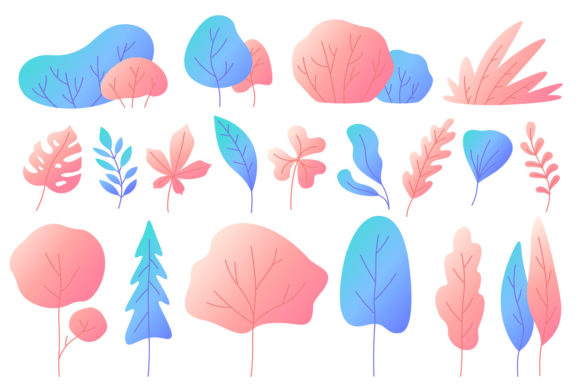
Whether you are crafting a brand identity for an eco-friendly startup, designing user interface elements for a wellness app, or creating print materials for a botanical garden, understanding the utility and application of these vector assets is crucial. The appeal lies not just in their appearance, but in their adaptability. By utilizing a collection that includes color gradation trees, bushes, and natural leaf signs, designers can create cohesive floristic fantasies that resonate with modern audiences seeking calm, clarity, and connection to nature.
The Aesthetic Appeal of Gradient Flat Design
Flat design revolutionized the digital world by stripping away skeuomorphic textures, shadows, and bevels in favor of simple shapes and bold colors. However, pure flat design can sometimes feel sterile or two-dimensional. This is where the introduction of gradients changes the game. Minimal Flat Leaves with Gradients retain the simplicity of flat vectors but introduce a subtle sense of volume and light through smooth color transitions.
This technique allows for a more dynamic visual experience. A leaf is no longer just a green shape; it becomes a study in light, shifting from a deep emerald at the base to a bright lime at the tip. This nuance adds sophistication without sacrificing readability. For outdoor space design concepts or botanical nature illustrations, this balance is essential. It captures the essence of living plants—their vitality and growth—while maintaining the geometric precision required for professional graphic design.
Furthermore, gradients allow for greater creative freedom in color palettes. Designers are not bound by realistic chlorophyll greens. They can experiment with sunset oranges, twilight purples, or oceanic blues, creating a floristic fantasy that feels both familiar and imaginative. This flexibility makes such assets invaluable for projects that aim to evoke emotion rather than just document reality.
Technical Advantages of Vector EPS10 Files
When selecting digital assets, the file format is often as important as the visual style. The inclusion of a vector EPS10 file in this product set is a significant benefit for professional workflows. Unlike raster images (such as JPEGs or PNGs), vector graphics are defined by mathematical paths rather than pixels. This means they can be scaled infinitely without any loss of quality.
For a designer working on a project that ranges from a small mobile app icon to a large-format billboard, this scalability is non-negotiable. You can resize a minimal flat leaf from a few millimeters to several meters, and the edges will remain crisp and clean. The EPS10 format ensures compatibility with a wide range of design software, including older versions of Adobe Illustrator, CorelDRAW, and other vector-based programs.
Additionally, the vector nature of these files allows for complete customization. As noted in the product description, if you want to separate elements, remove parts, or edit specific shapes, you can do so easily using a vector editor like Adobe Illustrator. This level of control is vital for bespoke design work. You might need to isolate a single leaf to create a pattern, combine multiple bushes to form a hedge, or alter the gradient stops to match a specific brand color guide. With raster images, such edits are difficult and often result in quality degradation. With vectors, every anchor point and curve is at your disposal.
Practical Applications in Industry and Lifestyle Projects
The versatility of Minimal Flat Leaves with Gradients extends far beyond simple decoration. These assets are functional tools that can enhance communication and user experience in various sectors.
- Branding and Identity: Companies in the health, wellness, and sustainability sectors often use botanical imagery to convey trust, growth, and natural purity. A logo featuring a gradient leaf can suggest innovation and freshness simultaneously.
- Web and App Design: In UI/UX design, icons and background elements must be lightweight and clear. Vector leaves serve as excellent visual cues for navigation menus, loading screens, or section dividers in lifestyle and gardening applications.
- Packaging Design: For organic products, teas, or cosmetics, packaging needs to stand out on shelves while communicating natural ingredients. The clean lines of flat design combined with eye-catching gradients create a premium look that appeals to modern consumers.
- Editorial and Print Media: Magazines, brochures, and posters related to travel, nature, or interior design can use these elements to break up text and add visual interest without overwhelming the layout.
Consider the scenario of a landscape architect presenting a proposal for a new public park. Using color gradation trees and bushes in their presentation materials can help clients visualize the seasonal changes and the aesthetic impact of the planting scheme. The abstract nature of flat design allows viewers to focus on the arrangement and color harmony rather than getting distracted by photorealistic details that may not yet exist.
Customization and Workflow Integration
Integrating these assets into your workflow is straightforward, thanks to the included preview and editable source files. The product provides one JPEG at 72ppi as a preview, allowing you to quickly assess the style and composition before diving into the editing process. Once you have confirmed the asset fits your project, the EPS10 file becomes your primary workspace.
To get the most out of these botanical nature outdoor space design elements, consider the following best practices:
- Layer Management: Upon opening the EPS file in Adobe Illustrator, take time to organize the layers. Group similar elements, such as all leaves of a certain type or all branches of a bush. This makes it easier to toggle visibility and select specific components for editing.
- Gradient Adjustment: Use the Gradient Tool to tweak the direction and intensity of the color blends. You might want a linear gradient for a sleek, modern look or a radial gradient to mimic the way light hits a curved leaf surface.
- Color Harmony: While the default gradients are beautifully curated, don’t hesitate to adjust them to fit your project’s palette. Use the Eyedropper tool to sample colors from your brand guidelines and apply them to the vector shapes.
- Composition: Experiment with overlapping elements. Since the designs are minimal, layering leaves can create complex textures and depths without cluttering the design. Transparency modes can also be used to blend colors where shapes intersect.
It is also worth noting that these elements are isolated, meaning they have transparent backgrounds. This makes them ready to drop into any existing design composite without the need for tedious clipping masks or background removal tools.
Why Choose Minimalism in Natural Illustrations?
In an era of information overload, minimalism serves as a visual breath of fresh air. By reducing natural forms to their essential shapes, Minimal Flat Leaves with Gradients allow the viewer to grasp the concept instantly. There is no cognitive load associated with deciphering complex textures or lighting effects. This immediacy is particularly valuable in digital environments where attention spans are short.
Moreover, minimalism is timeless. Trends in photorealism and intricate detailing come and go, but the fundamental principles of shape and color remain constant. Investing in a high-quality vector set ensures that your designs will remain relevant and stylish for years to come. The addition of gradients keeps the style contemporary, preventing it from feeling too stark or outdated.
Ultimately, the decision to use these assets comes down to the desire for efficiency and elegance. They provide a shortcut to high-quality visuals without compromising on creative control. Whether you are a seasoned graphic designer or a hobbyist looking to enhance your personal projects, this collection offers the tools needed to bring a touch of refined nature into your digital creations. By leveraging the power of vector editing and the beauty of gradient flat design, you can create works that are not only visually stunning but also functionally robust and adaptable to any medium.